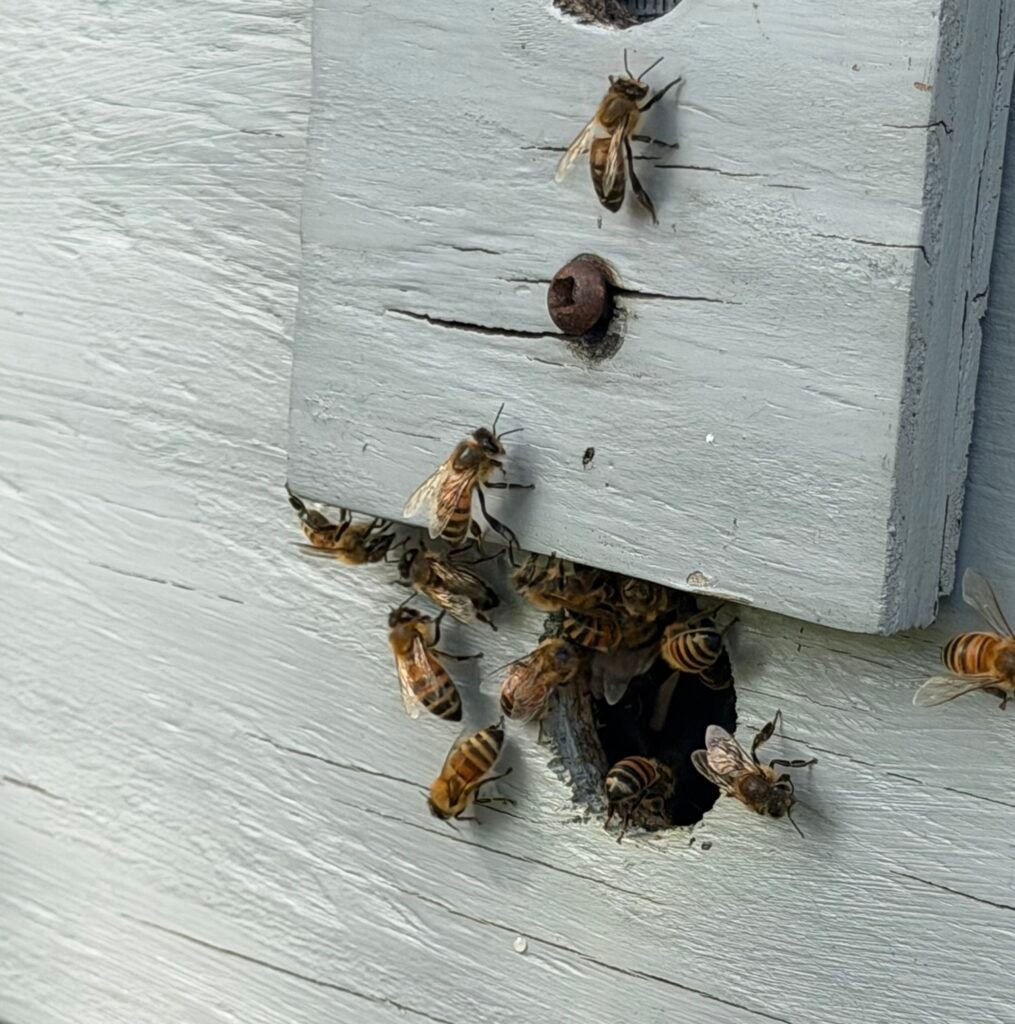
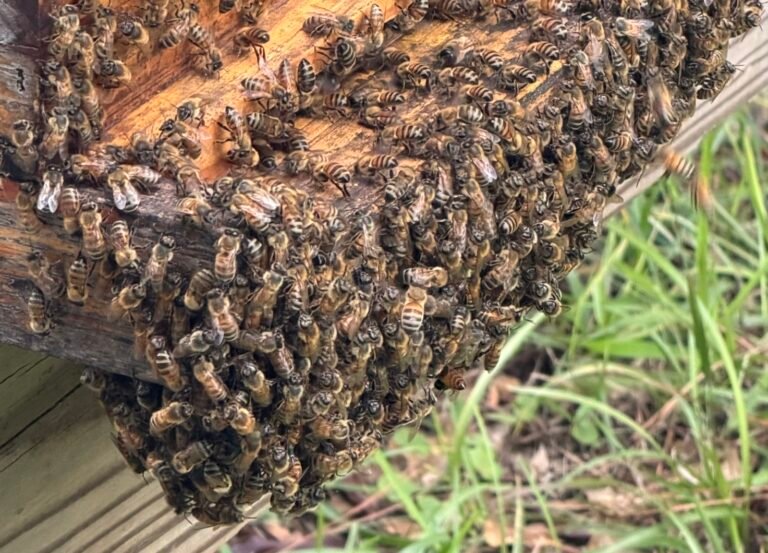
Four years! It has been four long years of waiting to finally catch a swarm of honey bees. Now, the real education can begin through hands-on experience, research, and careful observation. Week by week, I will have the opportunity to analyze, document, and learn from receiving a truly new hive and watching it grow naturally — without purchasing a nuc from a supplier. It is truly fascinating how an entire colony of bees can locate a small opening and transform it into a new home.
My hope is to properly care for these honey bees and eventually grow my apiary through several hive splits, a process I plan to explain in another post.
What makes this catch even more exciting is that it may not be the only one. Honey bees have also been spotted around another swarm trap at my parents’ house. My goal is to make the most of this opportunity by carefully studying both hives and learning the true ins and outs of beekeeping through observation, patience, and experience.
There are already many questions to explore: What works well? What does not? What methods truly benefit the hive long term? For example, I recently learned from another beekeeper that he prefers using an entrance reducer to keep the hive opening small, helping the colony better defend itself from predators and pests while also controlling the flow of traffic in and out of the hive. I have also discovered that some beekeepers treat their hives for Varroa mites, while others choose more natural approaches and avoid treatments altogether.
As I continue this journey, I hope to learn not only through research, but also through patience, observation, mistakes, and experience. Beekeeping already seems to be one of those lifelong learning pursuits where no two hives are ever exactly the same.
There is something about it that slowly draws you in — almost becoming an addiction in the best possible way. After a while, even though the venom from a sting can pack quite a punch, you no longer become angry at the sting itself. Instead, you find yourself disappointed knowing that one of the little ladies will ultimately give her life in defense of the hive.