A Beginner Beekeeper’s Walk-Away Hive Split
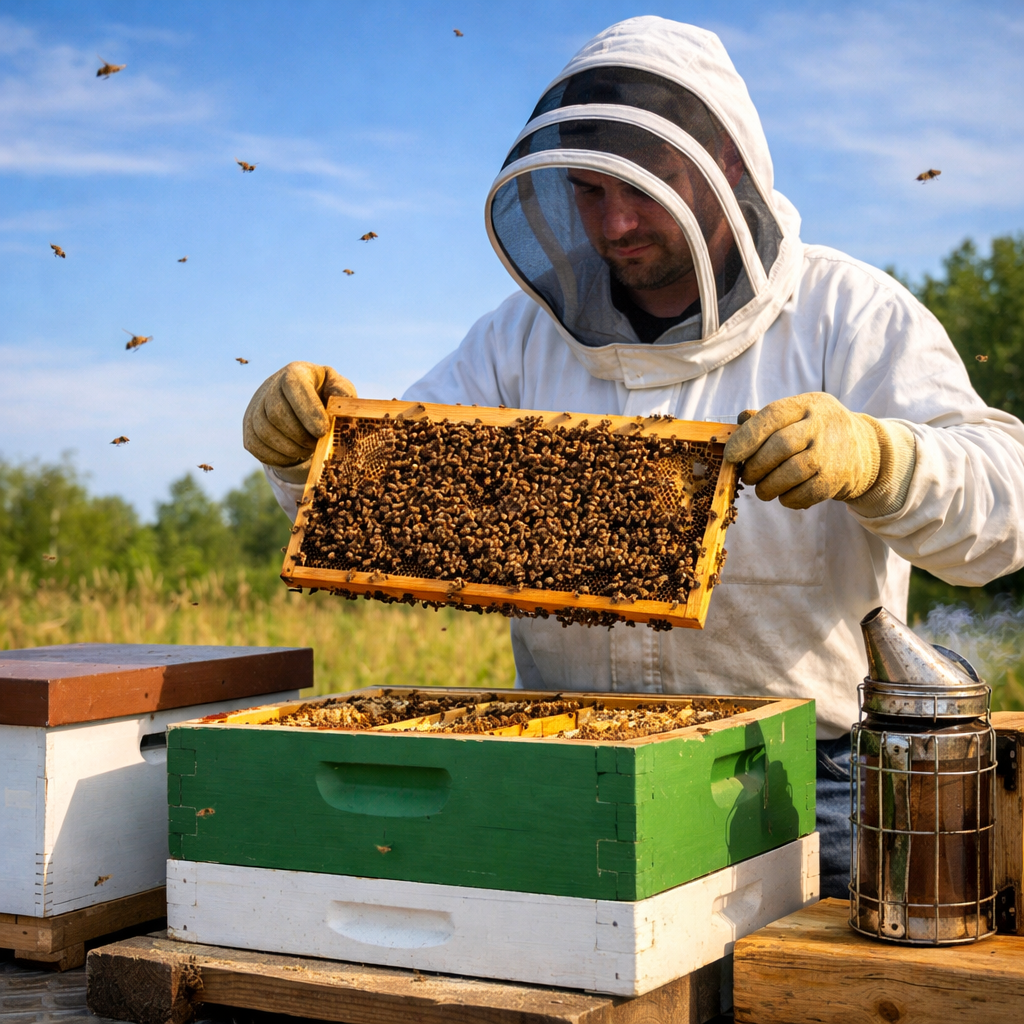
Back in the Bee Yard
After months of anticipation, I have begun the process of obtaining what many beekeepers call liquid gold—honey. Last summer I lost one of my hives, possibly due to swarming or wax moths. Sometimes it is difficult to know exactly what happened. If you couldn’t tell from the first few sentences, I am a beekeeper. Although I have kept hives on my property for a few years now, I still consider myself a beginner. Yes, the venom hurts when a bee stings you, but the effort is worth it when you can enjoy honey produced right in your own backyard. I am especially grateful to two men who helped me along the way. One shared valuable insight into an aspect of beekeeping that I will mention shortly, and the other provided me with a “nuc” (often pronounced “nuke”), which is what beekeepers call a small starter hive.
After losing one hive last summer, I was down to a single colony and knew I would need to start rebuilding this season. My goal is to slowly increase the number of colonies I have so that one day I may produce enough honey for family—and perhaps even a little to sell. More importantly, I want to learn the craft of beekeeping firsthand.
Starting Fresh with a Nuc
Yesterday marked a new beginning. I purchased a nuc from a former colleague and began preparing for the season ahead. The valuable insight I mentioned earlier is called splitting a hive. He showed me how to perform a split in hopes that a new queen will be raised and that I may end up with two healthy colonies this year. The method we used is known as a walk-away split.
In my research on BetterBee.com, the site describes a walk-away split as dividing a strong colony into two separate hives. One hive keeps the original queen, while the other becomes queenless and must raise a new queen on its own. To perform the split, a beekeeper moves frames containing bees, brood, and stored food from a healthy colony into another hive box. Once the frames are divided, the process is underway—even if the beekeeper does not know which hive contains the original queen.
The advantage of a walk-away split is its simplicity. It requires minimal equipment and manipulation of the hive, making it especially appealing for beginner beekeepers. However, the process takes patience. The queenless colony must first recognize it has no queen and begin raising an emergency queen from young larvae. The new queen must then mature, leave the hive for mating flights, and return before she begins laying eggs. During this time, the colony experiences a pause in brood production. When I say brood, I am referring simply to the eggs and larvae developing inside the hive.
Walk-away splits are a common technique because they rely on the natural instincts of the bees. Since I am still learning the ins and outs of the craft, I don’t mind trying this method and seeing how it develops.
The Fascinating Life of a Bee
When you begin studying the life of a honeybee, it truly is impressive. Each hive revolves around a single queen who lays the eggs. The worker bees, which are all female, perform the many tasks required to keep the colony functioning. Then there are the drone bees, the males, whose primary role is to mate with a virgin queen. In a future post, I hope to explore each of these roles in greater detail and share more about the life cycle of bees as I continue my research and experience. For now, I am simply grateful to be back in the bee yard. With spring right around the corner, it will be exciting to see how the next several months unfold.